Who is ToolBoxManager for?+
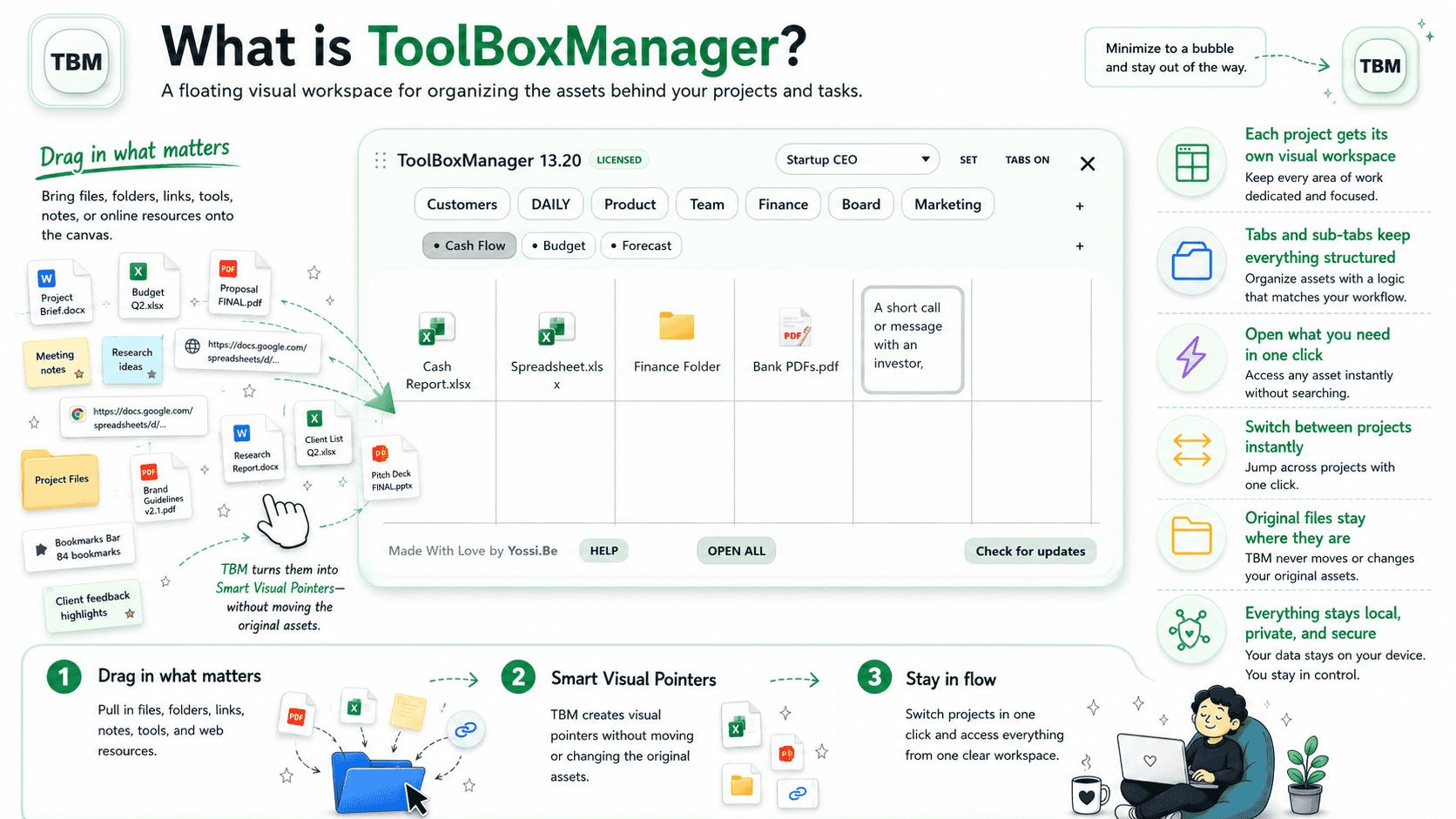
ToolBoxManager is built for people whose work is spread across files, folders, apps, links, research, and notes. That can mean a CEO moving between initiatives, a project manager running several workstreams, a consultant or researcher collecting sources, a student building a thesis, a creator preparing a launch, or people with ADHD at any age who benefit from visible structure and fewer context switches. If you regularly leave one project and need to re-enter another without rebuilding the mental map, TBM is designed for that moment.
How many computers can I use with one license?+
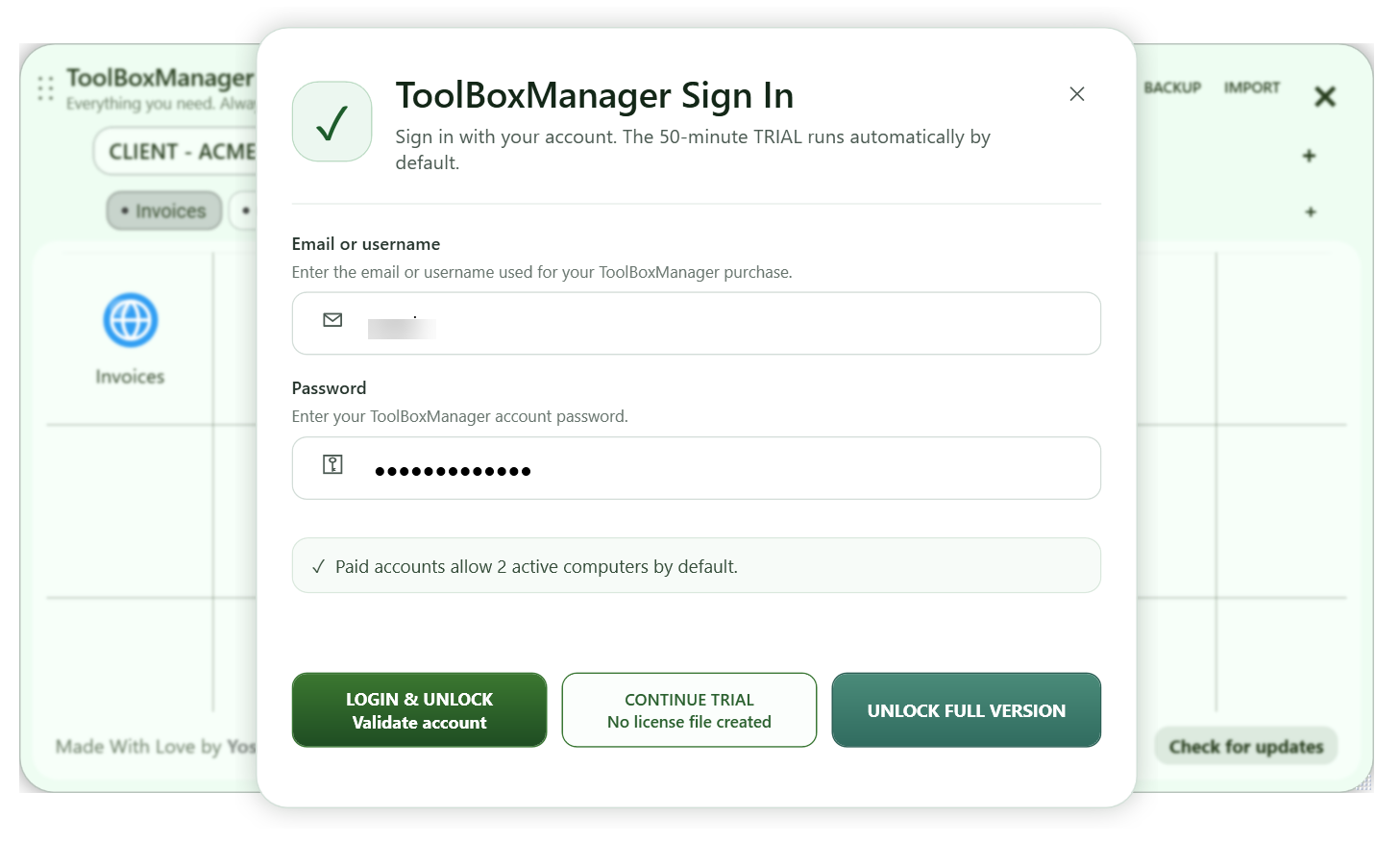
One license supports up to two active computers at the same time. The license is floating and self-managed: use Settings → License and Devices to review active computers and release or replace a device when you move to another machine.
Which operating systems does ToolBoxManager support?+
ToolBoxManager is currently built specifically for Microsoft Windows 11. It is a native Windows application optimized for fast response, low CPU and memory use, and portable operation without a traditional installer. A parallel Apple/macOS edition is a future ambition, not a currently available version.
Windows says the app might be unsafe. What should I do?+
Windows 11 may show a Microsoft Defender SmartScreen reputation warning the first time a newly distributed executable is opened. Before proceeding, confirm that you downloaded TBM from the official source and compare the SHA-256 hash and VirusTotal report distributed with the official release. If the message is the standard Windows protected your PC screen and the release checks out, choose More info, review the file details, then choose Run anyway. TBM is portable, runs as a lightweight layer over Windows, and does not need a traditional installer, Windows system-file changes, or Registry modifications to operate. If the hash does not match, the source is uncertain, or the warning is different from the expected SmartScreen reputation message, stop and download a fresh official copy instead of bypassing it.
Does TBM move or copy my original files?+
No. TBM creates Smart Visual Pointers to files, folders, applications, and web resources. Removing a pointer from TBM does not delete the original asset.
What is the difference between setup and daily use?+
Setup means creating the project Desktop, adding its tab structure, and bringing in the relevant materials. Daily use means entering the project, launching the working set, adding new information, switching projects, and returning without rebuilding context.
Can I open several assets together?+
Yes. OPEN ALL launches the assets in the active Sub-Tab. You can also select a specific group and open only that selection.
Can I keep different projects separate?+
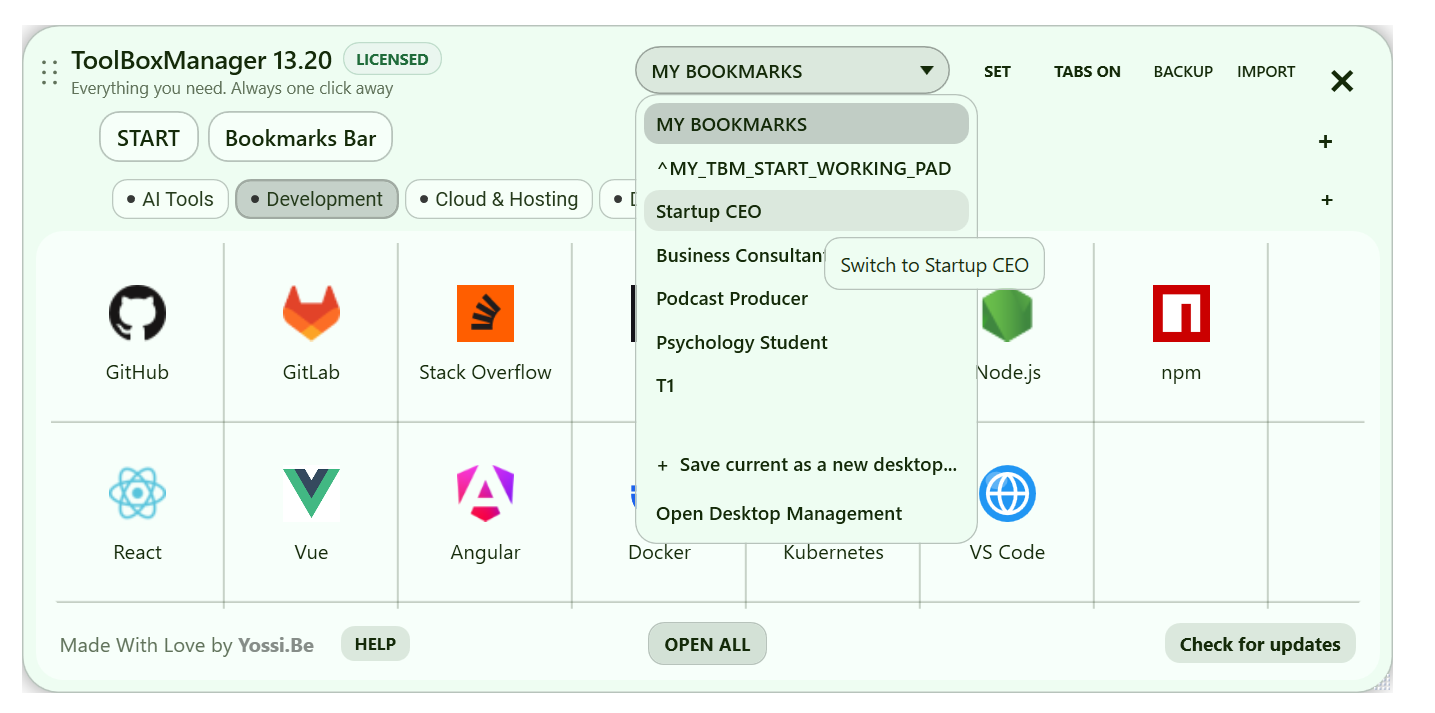
Yes. TBM supports up to 25 distinct Desktops through its rapid-access switcher. Each Desktop keeps its own project structure and visual pointers.
How does TBM help reduce visual clutter?+
Focus Mode can hide lower-priority tabs, and the full workspace can minimize into a movable Bubble in Small, Medium, or Large size.
Does TBM require installation?+
No. The current product documentation describes TBM as a standalone native and portable Windows executable that does not modify the Windows Registry.